
Finished Basement Insurance in Utah: Water Backup, Flood, and New-Home Decisions
A finished basement adds living space and new insurance questions. Learn how Utah homeowners can assess water backup, flood coverage, and rebuilding limits.
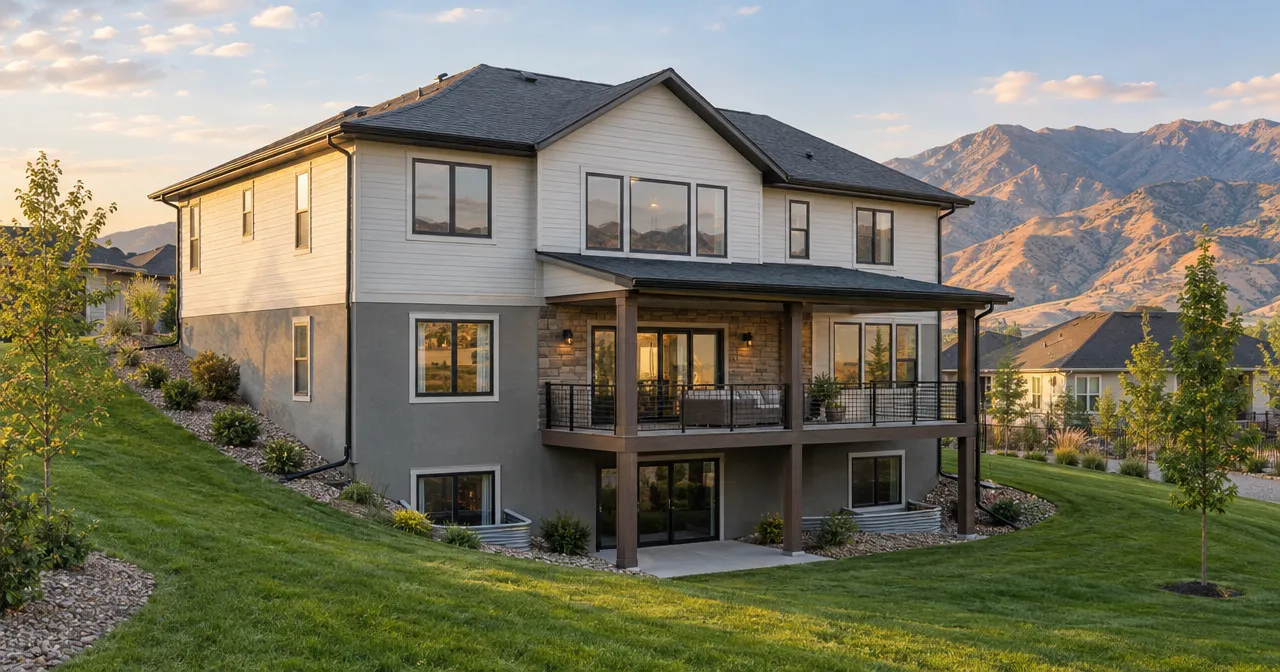
A new home in Springville may have a finished basement ready for movie nights on moving day. A similar house in Heber City may have an unfinished lower level that becomes a guest room two years later. In either case, the word water damage is not enough to tell you whether a loss is insured. The cause of the water, the coverage you selected, and the way the lower level is classified all matter.
That makes a finished basement a useful place to test a homeowners quote. Would the policy respond to a broken supply line? What if a floor drain backs up? What if water crosses the yard and enters a walkout door? Are the flooring, drywall, furniture, and mechanical systems treated the same way? For a newly built Utah home—especially one completed within the past two years—these questions belong on the list before closing, not just after a problem appears.
Start with the route the water took
Four incidents can leave the same wet carpet but lead to very different coverage decisions:
- A sudden plumbing leak inside the house. A supply line unexpectedly breaks behind the basement bathroom wall. Many homeowners policies cover resulting accidental water damage from a covered plumbing event, subject to the actual policy terms and deductible. Repair of the failed part itself, gradual leakage, or defective workmanship may be treated differently. Do not assume a builder warranty is interchangeable with insurance.
- Water backs up through a drain or sump system. A floor drain reverses or a sump pump fails and water enters the lower level. This is commonly excluded from a standard homeowners form unless you add a water-backup or sump-overflow endorsement, where available. Ask exactly which sources of backup the endorsement includes.
- Outside water enters at ground level. Snowmelt or heavy rain accumulates over the yard and flows through a basement door or window well. This may be a flood or surface-water event rather than a plumbing loss. Standard homeowners insurance generally does not cover flooding; a separate flood policy is the usual coverage to investigate.
- Moisture gradually seeps through a foundation. Persistent dampness, condensation, drainage or grading problems, and repeated leaks are not the same as a sudden covered event. Ask about exclusions and prevention rather than counting on an insurance payment to correct an ongoing condition.
The Utah Insurance Department's homeowners-claims guidance specifically notes that most standard homeowners policies do not cover flood damage or water backed up from drains and sewers, while some insurers offer endorsements for certain excluded losses. The precise answer always comes from the policy and facts of the claim—not a blanket promise that every basement leak is covered.
Before closing: insure the house that will actually be delivered
If you are buying new construction in Salem, Mapleton, Payson, or Spanish Fork, start the insurance conversation while the final selections and closing date are still being confirmed. Give the agency the property address, expected closing date, finished square footage, basement layout, construction materials, and the builder's final upgrade list. If the lower level is finished by the builder, make sure the replacement-cost estimate reflects it. If the plan shows an unfinished basement that you intend to finish later, say so; the present and future estimates may differ.
Ask the lender or closing team when proof of insurance is needed and confirm that the homeowners policy begins when your ownership and responsibility begin. Builder-held coverage and a builder warranty should not be assumed to extend through your period of ownership. The Consumer Financial Protection Bureau's home-insurance checklist recommends comparing written quotes, coverage amounts, deductibles, and lender requirements before closing. If the closing date shifts, tell your agent so the effective date can be checked.
A dwelling limit is not the purchase price. The price of a new home can include land, location, and market demand; dwelling coverage is intended to address the cost to rebuild the insured structure. A finished basement adds framing, electrical work, HVAC distribution, doors, cabinetry, flooring, and bathrooms that can be costly to recreate. Make sure the replacement-cost worksheet describes the actual finishes, not merely the builder's basic model. The NAIC explains that dwelling coverage should be sufficient to fully rebuild the insured home and that coverage depends on the policy's covered causes of loss and limits.
For example, two 2,400-square-foot homes might have the same sale price, but one has a finished lower level with a bathroom, built-ins, and a separate HVAC zone while the other has bare concrete. The rebuild estimates should not be treated as interchangeable. Ask whether extended replacement-cost coverage is available, what conditions apply, and whether any percentage extension is tied to maintaining a specified base dwelling limit. Even a generous extension does not turn an excluded flood into a covered homeowners loss.
Water-backup endorsements: read the small numbers
A water-backup endorsement can be important for a finished basement, but its limit and wording deserve more attention than the label. Ask whether it addresses sewer or drain backup, sump-pump failure or overflow, and associated cleanup. Confirm whether there is a separate deductible, a per-occurrence limit, a different limit for damaged belongings, or restrictions on mold-related costs. Carriers do not all structure these options alike.
Suppose a family in Orem has basement flooring, drywall, a sofa, and stored belongings damaged by a covered sewer backup. If the endorsement limit is $10,000 and eligible repair and replacement costs are $24,000, the endorsement's ceiling could leave a substantial balance even before any applicable deductible. Those numbers are only an illustration; the actual payout depends on what the contract covers, exclusions, and claim adjustment. It is useful to price more than one available limit against the value of what is actually downstairs.
A backup endorsement is not a substitute for flood insurance. Water rising over the lawn and entering a window well does not become sewer backup simply because it lands on the same carpet. Conversely, a flood policy does not automatically replace a missing backup endorsement. Ask an agent to walk through both scenarios with the policy wording in front of you.
Flood insurance: look past the map and the word “basement”
Homeowners in Utah County and Wasatch County should consider surface-water exposure even if they are not next to a river. Grading around a new subdivision, a sloped lot in Midway, a basement window well in Provo, or runoff near a walkout in Heber City can affect how water approaches a house. These examples are reasons to investigate a property, not a claim that every home in those cities has the same risk. The Utah Insurance Department's flood-preparedness page notes that flooding can occur away from waterways and advises buying coverage before a flood is imminent.
Use the address, local history, site grading, and any lender flood determination as starting points. A map designation is valuable but does not describe every route water can take across an individual lot. Ask about both National Flood Insurance Program (NFIP) and available private flood options, and compare their limits, exclusions, deductibles, and effective dates. NFIP policies generally have a 30-day waiting period, but there are exceptions, including certain policies bought in connection with making or changing a mortgage; FloodSmart lists the current exceptions. Confirm the effective date for the specific policy rather than assuming a closing-day request starts flood coverage immediately.
The NFIP definition of a basement is technical: an area with a floor below ground level on all sides. It is not determined by whether you call the room a family room. Under NFIP coverage, basement building components and personal property are restricted to specified items; a finished room does not mean its flooring, decorative finishes, furniture, and electronics will all be paid for after a flood. A lower-level walkout may be classified differently from a fully below-grade basement, and other below-elevated-floor rules can also matter. Have the property's layout reviewed rather than guessing based on a real-estate listing. NFIP guidance on basement coverage lists examples of covered equipment and excluded furnishings and finishes.
Private flood policies may use different definitions or offer different coverage. If a finished basement is central to your home, ask for a comparison that names what would happen to the walls, floor coverings, appliances, mechanical equipment, and personal property in that particular lower level. Do not infer full replacement from the headline building limit.
After move-in: update the estimate when the basement changes
The first year in a new home often changes the risk profile. You may finish an unfinished basement, add a bathroom, install built-in cabinets, turn a storage room into a bedroom, or place more belongings downstairs. Tell your agent when the work is planned and when it is complete. Major work may also need a discussion of coverage while contractors are on site, and a newly finished level may change the dwelling estimate, contents needs, and water-backup limit.
Keep records that make a later review concrete: the final build sheet, contractor invoices, photos of finished rooms, and a simple inventory of significant belongings. If you rent out the property or use the lower level as a separate rental unit, disclose that use before relying on an ordinary owner-occupied homeowners policy; landlord or other coverage may be needed. A condo owner should instead review the association's master policy and the unit policy, since the split of responsibility for interior finishes can differ.
Practical maintenance and insurance work together but do different jobs. Learn where the main water shutoff is; keep window wells and drains clear; check that downspouts move water away from the house; and ask a qualified professional to examine persistent dampness or problematic grading. These steps can reduce or clarify risk, but they are not a guarantee against loss or a substitute for the right policy.
Keep the basement review connected to the rest of the household
A larger mortgage or a newly finished family room may prompt other useful questions, but they should not distract from the water-coverage distinctions. Compare home and auto quotes with the same liability limits and deductibles before deciding whether a bundle actually improves value. If guests use the basement regularly or you have substantial assets, review personal liability and whether an umbrella policy fits above the required underlying home and auto limits. If the new mortgage would be difficult for a surviving partner to carry, consider a separate life-insurance review; a homeowners policy does not replace income. None of these policies makes an excluded basement flood covered, but they may belong in the same household review.
Questions to bring to your policy review
- Is the basement recorded as finished or unfinished in the dwelling replacement-cost estimate? Are builder upgrades included?
- When exactly does the homeowners policy take effect, and has the lender received the documentation it needs?
- Does the policy cover sudden plumbing damage, and how does it treat the failed part, slow leakage, and defective work?
- Is water-backup or sump-overflow coverage included? What are its limit, deductible, and important exclusions?
- What is the flood exposure for this specific lot, when would a flood policy start, and how would its basement or lower-level restrictions apply?
- When should the agency rerun the estimate after basement finishing, a change in use, or substantial new belongings?
Whether you are closing on a new build in Spanish Fork, planning basement improvements in Springville, or reviewing a newer home in Park City, these answers are more useful than a single premium figure. Contact Oldroyd Insurance Agency for a personalized policy review or quote. The team can explain the distinctions clearly, lay out side-by-side options from multiple carriers, and help you choose coverage suited to your home and circumstances.