Home-Based Business Insurance in Utah: A New Homeowner’s Coverage Checklist
Running a business from a newer Utah home? Learn where homeowners coverage stops and how to review equipment, liability, vehicles, contracts, and employees.
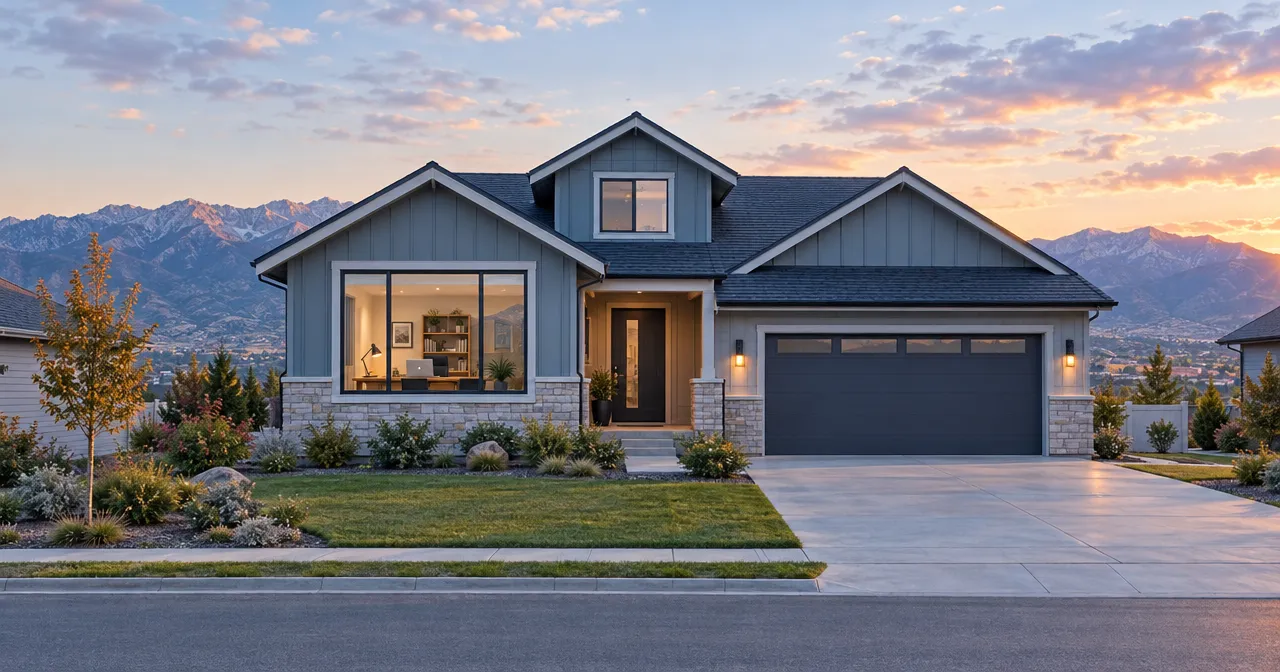
A new house in Springville might have a spare bedroom that becomes a consulting office. In Heber City, the garage of a recently completed home might hold tools and materials for a growing trade business. Both owners live and work at the same address, but their insurance questions are quite different. A homeowners policy may protect the house against a covered fire while offering little protection for the business equipment inside it—and may not respond to a client's injury or an allegation that the business gave faulty advice.
For homeowners in Utah County and Wasatch County, the useful question is not simply “Do I work from home?” It is what belongs to the household, what belongs to the business, and which policy is supposed to respond to each loss? The distinction matters before closing on a new build, when you begin taking clients, and again as your operation grows.
First, separate remote work from operating a business
An employee using a company laptop at the kitchen table is not automatically in the same position as a self-employed bookkeeper who meets customers at home. A freelance designer may own equipment and have contracts but never receive visitors. A maker may have inventory, packaging, deliveries, and a workshop. An in-home child-care or repair operation may pose still different risks and may not qualify for the same insurance options.
Tell the homeowners insurer or agent what actually happens at the property: who owns the equipment, whether clients or employees visit, whether you store stock, whether you make or repair products, and whether vehicles or outbuildings support the operation. The National Association of Insurance Commissioners (NAIC) notes that standard homeowners and renters policies generally have limited business-property protection and do not include professional liability. An endorsement may fit some activities; others need separate business coverage. Do not assume that working only evenings, forming an LLC, or having no storefront automatically resolves the insurance issue.
A useful one-page description for an agent might read: “I do bookkeeping from a home office in Mapleton; I own two computers, a printer, and client records; I meet clients by video; I drive my own car to client offices twice a month; I expect to hire a part-time assistant.” That gives an insurer far more to work with than “small home business.” If the work is prohibited or restricted by a policy, the solution is to find an appropriate insurer and coverage—not to leave the activity out of the application.
Before closing on a newer home, describe the home you are buying
If the property was built within the past eight years—especially if construction finished in the past two—start with the home's insurance details before the closing date. Provide the final address, closing date, floor plan, finished square footage, materials, and builder upgrades. Identify any finished basement, detached structure, workshop, or dedicated client entrance. Ask the lender when it needs evidence of homeowners insurance and confirm the policy's effective date if closing moves. The Consumer Financial Protection Bureau recommends comparing written home quotes, coverage amounts, deductibles, and lender requirements before closing.
Check the dwelling coverage limit against the cost to rebuild the actual house, not merely its sale price or loan balance. A custom office with built-in cabinetry, a finished lower level, or upgraded finishes may change the reconstruction estimate. The home's market price includes land and location; the insured replacement cost concerns rebuilding the structure with materials of similar kind and quality. Ask how the estimate treats builder upgrades and whether any extended replacement-cost option has conditions or a cap. The NAIC explains the difference between replacement cost and market value.
The home policy and the business policy solve different problems. Increasing the dwelling limit does not necessarily increase coverage for business inventory or professional mistakes. Likewise, buying commercial property coverage for equipment does not automatically raise the home's rebuilding limit. If the property has a finished basement or office near a lower-level entrance, discuss water-backup and flood exposure separately; typical homeowners coverage does not make every source of water damage insured. Earthquake coverage is another separate discussion. Focus on the actual property and policy wording rather than assuming a recently built house needs no endorsements.
If you are finishing a basement office or converting a garage after move-in, tell both the home and business insurers before the work begins. Ask what covers materials, equipment, and the structure while work is underway, and update the dwelling estimate once the improvement is complete. A builder's warranty, if any, addresses certain defects under its own terms; it is not a substitute for homeowners or business insurance.
Make a business-property inventory, not just a home inventory
Picture a small online seller in Payson with a laptop, camera, packing supplies, and $18,000 of inventory in a room over the garage. Even if the home policy covers damage to the room from a covered fire, it may impose a separate low limit on property used for business. Items at a market booth, in a vehicle, or at a customer's site may face different off-premises terms. The exact limits vary by insurer and form, so ask for the provisions rather than relying on an example limit from another company's brochure.
List what you own, what you lease, and what belongs to customers. Include stock, tools, computers, specialized equipment, samples, records, and furniture; note replacement costs and where each item travels. For a photographer in Provo, the question may be whether cameras are covered in the studio and at a job site. For a contractor in Salem, it may be whether tools in a van or at a customer's property need a separate equipment form. For a consultant in Orem, business data and the cost of recovering operations may matter more than the physical desk.
Ask whether the proposed coverage pays replacement cost or depreciated actual cash value, whether it covers equipment away from home, and whether customer property is covered while in your care. If damage to a home office would stop revenue, also ask how business-income and extra-expense coverage works: what event triggers it, how long any waiting period lasts, and what records you would need. A business interruption feature is not a general guarantee against slow sales or every kind of outage. Keep purchase records and photos in a location you can access after a loss.
Match liability coverage to what you do, not just where you do it
There are several ways a home business can be accused of causing harm:
- A visitor is injured. A client slips on the walkway to a home studio in Midway. Ask whether the homeowners policy excludes business-related visitors and whether a business general liability policy addresses this situation.
- Your product or work damages someone else's property. A product you sell or completed installation you perform is alleged to cause damage. Ask about products/completed-operations terms and exclusions rather than assuming a policy labeled “general liability” covers every claim.
- A client alleges a financial loss from your service. A designer misses a contract deliverable, or a consultant is accused of an error in advice. Professional liability, often called errors and omissions, addresses a different exposure from a slip-and-fall claim; its terms and eligibility need a separate review.
If a client or landlord asks for proof of insurance, read the contract before sending a certificate. It may specify types of insurance, minimum limits, an additional-insured endorsement, or a deadline. An agent can compare those requirements with the actual policy and request endorsements when available. In Utah, a certificate of insurance summarizes coverage but does not change the underlying policy. A certificate showing a limit is not evidence that an excluded activity became insured or that a requested additional-insured status was granted.
A contract can also require a limit above what you carry. If a Park City venue or Salt Lake City commercial customer requests a specific liability limit, ask for a quote and review any exclusions before agreeing to terms. Do not promise a certificate or endorsement that a carrier has not approved.
Compare the three common policy approaches
A homeowners business endorsement may be suitable for a limited, eligible activity with modest property and visitor exposure. Ask exactly what it changes: business-property limits, on-premises and off-premises coverage, visitor liability, and any restrictions on inventory, employees, or customer visits. Not every activity qualifies.
A separate in-home business or small commercial policy may offer broader property and liability features without changing the core purpose of the homeowners policy. Confirm whether it covers the business assets you actually have and whether it addresses income loss. The policy name alone cannot tell you what is included.
A business owners policy (BOP) commonly packages commercial property, general liability, and a form of business-income coverage for eligible businesses. It does not automatically include professional liability, workers' compensation, or commercial auto. If a growing home business later moves to leased space in Spanish Fork or West Valley City, revisit both the location and the property schedule; do not assume the original home address still covers the new workplace.
Compare quotes on the same facts and ask for a side-by-side view of covered operations, property limits, liability limits, deductibles, exclusions, and effective dates. A cheaper package that excludes your principal activity is not a meaningful comparison.
Don't let the business spill silently into auto or umbrella coverage
A household car used occasionally to visit a client may be handled differently from a van that regularly carries tools, inventory, or employees. Tell the auto insurer how each vehicle is titled, who drives it, how often it is used for work, and what it transports. Personal auto policies can exclude certain business uses, while commercial policies may address rented or non-owned vehicles under their own terms. If employees use their own cars for company errands, ask specifically about hired and non-owned auto liability; do not assume their personal policies alone protect the business. Review auto liability limits separately from coverage for the vehicle itself and compare comprehensive and collision deductibles if you need physical-damage protection.
A personal umbrella is designed for specified personal liability risks above qualifying underlying policies. Do not assume it is a backstop for a business lawsuit. Ask whether a commercial umbrella or excess liability policy is appropriate for the operations and contracts you have. If you use an ATV, boat, trailer, or RV for paid work rather than purely personal recreation, disclose that use too; a recreational policy may not be written for commercial activity. These are classification questions to settle before a loss, not after one.
A business with staff needs a new review
Hiring even one assistant changes the conversation. The Utah Labor Commission's employer guide explains that employers generally must provide workers' compensation coverage for employees, subject to exceptions; owners who do all the work with no employees may be treated differently. Do not infer an exemption from working at home, a part-time schedule, or an independent-contractor label. Confirm your particular arrangement with the Labor Commission or a qualified professional.
Also update the insurer about payroll, duties, visits, vehicles, and any new services. A solo web designer who begins hosting in-person workshops or selling physical products may need a different liability and property arrangement. If a client contract calls for professional liability, check whether the policy applies to the new service and what happens to claims after a business change or closure.
Home and business planning can meet without merging the policies. A larger mortgage and family obligations may prompt a term-life-insurance review; business continuity and ownership arrangements may raise separate life-insurance questions. A self-employed owner losing employer benefits may also need a health-insurance review. These policies protect different interests and do not fix an exclusion in the homeowners or BOP form. Keep the discussion grounded in your household and business needs.
Review the coverage at each change in use
You do not need to wait for the annual renewal to revisit a business operated from a newer home. Bring the agent a concise update whenever you finish a room, install expensive equipment, begin receiving customers, sign a contract with insurance requirements, add a driver, hire staff, or move inventory to another location. Confirm effective dates and keep the revised declarations and endorsements with your business records.
Before closing or the next review, ask these six questions:
- Does the homeowners insurer know exactly what business activities take place at the address?
- Does the dwelling replacement-cost estimate include the actual finished rooms, builder upgrades, and later improvements?
- Which policy insures equipment and inventory at home, in transit, and at a customer's location—and for how much?
- Which policy would address a visitor's injury, a product claim, or an alleged professional mistake?
- Do our vehicles, employees, and client contracts require coverage or endorsements we have not yet arranged?
- What changed since we last compared limits, exclusions, deductibles, and prices?
If you are buying a new home in Spanish Fork, building a home-based business in Heber City, or revisiting an established operation in Provo, contact Oldroyd Insurance Agency for a personalized policy review or quote. The team can explain the distinctions clearly, compare side-by-side options from multiple carriers, and help you choose coverage suited to the way you actually live and work.